Showing posts with label Sermons. Show all posts

Sunday, September 18, 2011

Preparing a sermon

http://www.joshharris.com/2005/12/preparing_a_sermon_with_john_stott.php

11 Comments
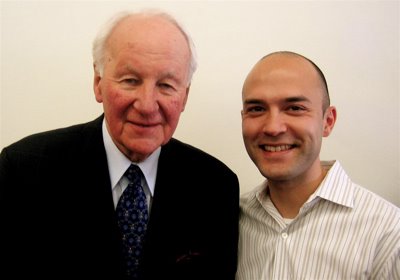
The following is something I put together for myself after reading John Stott's book Between Two Worlds on preaching. This is basically an outline of his chapter on preparing a message with slight additions for my own personal use. I hope it encourages fellow pastors. (The picture is from this spring when I had the privilege of meeting Mr. Stott when he visited the states.)

Preparing a Sermon

1. Choose your text and meditate on it.�Ģ Read the text, re-read it, re-read it and read it again. �Ģ Probe it, chew on it, bore into it, soak in it. �Ģ You are not called to preach yourself or your ideas, but charged to "preach the word" (2 Tim. 4:1-2). Clarence Edward McCartney: "Put all the Bible you can into it." 2. Ask questions of the text.
�Ģ What does it mean? Or better yet, what did it mean when first spoken or written?
�Ģ What did the author intend to affirm or condemn or promise or command?
�Ģ What does it say? What is its contemporary message? How does it speak to us today?
�Ģ Remember: Keep these questions distinct but together--the text's meaning is of purely academic interest unless you go on to discern its message for today, it's significance. But you cannot discover it's contemporary message without first wrestling with its original meaning.
3.Combine diligent study with fervent prayer.
�Ģ All the time you study cry humbly to God for illumination by the Spirit of truth. Like Moses, "I pray you, show me your glory" (Exod 33:18), and Samuel, "Speak, Lord, for your servant is listening" (1 Sam 3:9).
�Ģ Stott: "I have always found it helpful to do as much of my sermon preparation as possible on my knees, with the Bible open before me, in prayerful study.
�Ģ R.W. Dale: "Work without prayer is atheism; and prayer without work is presumption."
4. Isolate the Dominant Thought of the Text.
�Ģ Every text has a main theme, an overriding thrust.
�Ģ A sermon is not a lecture, it aims to convey only one major message
�Ģ The congregation will forget details of the message, but they should remember the dominant thought, because all the sermon's details should be marshaled to help them grasp its message and feel its power.
�Ģ Once the text's principle meaning has been determined, express it in a 'categorical proposition.'
�Ģ J.H. Jowett: "I have a conviction that no sermon is ready for preaching...until we can express its theme in a short, pregnant sentence as clear as a crystal. I find the getting of that sentence is the hardest, the most exacting and the most fruitful labor in my study...I do not think any sermon ought to be preached, or even written, until that sentence has emerged, clear and lucid as a cloudless moon."
�Ģ Ian Pitt-Watson: "Every sermon should be ruthlessly unitary in its theme."
�Ģ Don't by-pass the discipline of waiting patiently for the dominant thought to disclose itself. You have to be ready to pray and think yourself deep into the text, even under it, until we give up all pretensions of being its master or manipulator, and become instead its humble and obedient servant.
5. Arrange Your Material to Serve the Dominant Thought
�Ģ The goal is not a literary masterpiece, but organization that enables the text's main thrust to make its maximum impact.
- Ruthlessly discard irrelevant material
- Subordinate material to theme so that it illumines and supports it.
�Ģ Golden Rule for Sermon Outlines: Let each text supply its own structure. Let it open itself up like a rose to the morning sun.
�Ģ Be precise with your words. It is impossible to convey a precise message without choosing precise words.
�Ģ Words to use:
- Simple and Clear words. Ryle: "Preach as if you had asthma."
- Vivid words. They should conjur up images in the mind.
- Honest words. Beware of exaggerations and be sparing in use of superlatives.
- C.S. Lewis: don't just tell people how to feel, describe in such a way that people feel it themselves.
- Don't use words too big for the subject.

6. Remember the Power of Imagination--Illustrate!

�Ģ Imagination: the power of the mind by which it conceives of invisible things, and is able to present them as though they were visible to others. (Beecher)
�Ģ Remember that humans have trouble grasping abstract concepts--we need them converted into pictures and examples.
�Ģ Exert your greatest effort for illustrations that reinforce and serve the dominant thought.
�Ģ Think of illustrations as windows that let in light on our subject and help people to more clearly see and appreciate it.
�Ģ Beware of illustrations that draw too much attention (to themselves instead of the subject) or which actually take people away from the main point.


7. Add Your Introduction

�Ģ It's better to start with the body so that we don't twist our text to fit our introduction.
�Ģ Stott: A good introduction serves two purposes. First, it arouses interest, stimulates curiosity, and whets the appetite for more. Secondly, it genuinely introduces the theme by leading the hearers into it.
�Ģ Don't make the intro too long or too short. "Men have a natural aversion to abruptness, and delight in a somewhat gradual approach. A building is rarely pleasing in appearance without a porch or some sort of inviting entrance."
8. Add Your Conclusion
�Ģ Conclusions are more difficult. Avoid endlessly circling and never landing. Avoid ending too abruptly.
�Ģ A true conclusion goes beyond recapitulation to personal application. (Not that all application should wait till the end--the text needs to be applied as we go along.)
�Ģ Nevertheless, it is a mistake to disclose too soon the conclusion to which we are going to come. If we do, we lose people's sense of expectation. It is better to keep something up our sleeve. Then we can leave to the end that persuading which, by the Holy Spirit's power, will prevail on people to take action.
�Ģ Call the congregation to act! Our expectation as the sermon comes to an end, is not merely that people will understand or remember or enjoy our teaching, but that they will do something about it. If there is no summons, there is no sermon!
�Ģ The precise application of your sermon depends on the character of the text. The dominant thought points us to how people should act in response. Does the text call to repentance or stimulate faith? Does it evoke worship, demand obedience, summon to witness, or challenge to service? The text itself determines the particular response we desire.
�Ģ Consider the composition of your congregation. It is good to let your mind wander over the church family and ask prayerfully what message God might have for each from your text. Consider their unique circumstances, weaknesses, strengths and temptations.
9. Write Down Your Sermon
�Ģ Don't take too long to get to this stage! Get something on paper, don't endlessly noodle on vague notes (this is my temptation).
�Ģ Writing obliges you to think straight.

10. Edit it Again

�Ģ View hitting your time goal (40-45 minutes) as just as essential to its overall effectiveness as anything else you do. People will take more away if you say less.
�Ģ Ruthlessly cut the unneeded and extra. Look for places where you can be more concise.
�Ģ Err on the side of cutting things--especially long quotes.
11. Pray over Your Message
�Ģ Use the 30 minutes before you leave for church to pray over your message.
�Ģ Stott: "We need to pray until our text comes freshly alive to us, the glory shines forth from it, the fire burns in our heart, and we begin to experience the explosive power of God's Word within us."

Sunday, July 17, 2011

The Earthquake in Messina

Lately i have seen the earthquake in Messina used as a sermon illustration.

From a sermon by Bobby Scobey

Judgment Against Civil Rulers.

“You rulers make decisions based on bribes; you priests teach God’s laws only for a price; you prophets won’t prophesy unless you are paid. Yet all of you claim to depend on the LORD.

“No harm can come to us,” you say, “for the Lord is here among us” (Micah 3:11 NLT).

“Because of you, Mount Zion will be plowed like an open field; Jerusalem will be reduced to ruins! A thicket will grow on the heights where the Temple now stands” (Micah 3:12 NLT).

Sometimes the cup of iniquity is full and the people are ripe for judgment. In such a case it may happen as it did in the flourishing and extraordinarily beautiful city of Messina, Sicily, the third largest city in Italy. In the early morning of December 28, 1908, the city was almost entirely destroyed by an earthquake and associated tsunami that killed about 60,000 people and destroyed most of the ancient architecture.

Only a few hours before that devastating earthquake, the unspeakably wicked and irreligious condition of some of the inhabitants was expressed in a series of violent resolutions that were passed against all objections.

The journal Il Telefono, printed in Messina, actually published in its Christmas issue an abominable parody, daring the Almighty to make himself known by sending an earthquake! And in three days the earthquake came!

God cannot be avoided.


From Revive Our Hearts

Nancy
: One hundred years ago Messina was a prosperous, gorgeous coastal city on the Italian island of Sicily, just off the toe of the boot there. This city of Messina had a population of about 150,000, but it had become a wicked and irreligious city. On Christmas day of 1908, a local newspaper in Messina published a blasphemous parody against God. In that article they dared God to make Himself known by sending an earthquake.

Exactly three days later, December the 28th, 1908, at 5:30 in the morning, a huge earthquake and a massive tidal wave came and utterly destroyed Messina and dozens of nearby towns. I’ve read some different estimates as to the number of deaths that resulted—somewhere between 80,000 and 100,000 it appears. It’s considered the deadliest earthquake in European history.

As you read about a story like that where men just defy God and say, “Show us that You’re God. Prove it by an earthquake.” Three days later the earthquake comes and destroys the city. You ask, “Was this an act of God that was directly in response to the challenge that was issued in that newspaper?”
Well, I want to be quick to say that you and I cannot fathom the heart and the thoughts and the ways of God. But we do know that there is a God, and we know that He is a holy God. And we know that all sin—that’s all sin—must and will be judged.

Sunday, February 21, 2010

John Stott's Final Sermon: The Model - Becoming More Like Christ

Dr John Stott's final sermon delivered at the Keswick Convention 17 July 2007.

by Dr John Stott
Posted: Friday, August 17, 2007, 15:38 (BST)

I remember very vividly, some years ago, that the question which perplexed me as a younger Christian (and some of my friends as well) was this: what is God's purpose for His people? Granted that we have been converted, granted that we have been saved and received new life in Jesus Christ, what comes next? Of course, we knew the famous statement of the Westminster Shorter Catechism: that man's chief end is to glorify God and to enjoy Him forever: we knew that, and we believed it. We also toyed with some briefer statements, like one of only five words - love God, love your neighbour. But somehow neither of these, nor some others that we could mention, seemed wholly satisfactory. So I want to share with you where my mind has come to rest as I approach the end of my pilgrimage on earth and it is - God wants His people to become like Christ. Christlikeness is the will of God for the people of God.

So if that is true, I am proposing the following: first to lay down the biblical basis for the call to Christlikeness: secondly, to give some New Testament examples of this; thirdly, to draw some practical conclusions. And it all relates to becoming like Christ.

So first is the biblical basis for the call to Christlikeness. This basis is not a single text: the basis is more substantial than can be encapsulated in a single text. The basis consists rather of three texts which we would do well to hold together in our Christian thinking and living: Romans 8:29, 2 Corinthians 3:18 and 1 John 3:2. Lets look at these three briefly.

Romans 8:29 reads that God has predestined His people to be conformed to the image of His Son: that is, to become like Jesus. We all know that when Adam fell he lost much - though not all - of the divine image in which he had been created. But God has restored it in Christ. Conformity to the image of God means to become like Jesus: Christlikeness is the eternal predestinating purpose of God.

My second text is 2 Corinthians 3:18: 'And we all, with unveiled face, beholding the glory of the Lord, are being changed into his likeness, from one degree of glory to another; for this comes from the Lord who is the Spirit.' So it is by the indwelling Spirit Himself that we are being changed from glory to glory - it is a magnificent vision. In this second stage of becoming like Christ, you will notice that the perspective has changed from the past to the present, from God's eternal predestination to His present transformation of us by the Holy Spirit. It has changed from God's eternal purpose to make us like Christ, to His historical work by His Holy Spirit to transform us into the image of Jesus.

That brings me to my third text: 1 John 3:2. 'Beloved, we are God's children now and it does not yet appear what we shall be but we know that when he appears, we will be like him, for we shall see him as he is.' We don't know in any detail what we shall be in the last day, but we do know that we will be like Christ. There is really no need for us to know any more than this. We are content with the glorious truth that we will be with Christ, like Christ, for ever.

Here are three perspectives - past, present and future. All of them are pointing in the same direction: there is God's eternal purpose, we have been predestined; there is God's historical purpose, we are being changed, transformed by the Holy Spirit; and there is God's final or eschatalogical purpose, we will be like Him, for we shall see Him as He is. All three, the eternal, the historical and the eschatalogical, combine towards the same end of Christlikeness. This, I suggest, is the purpose of God for the people of God. That is the biblical basis for becoming like Christ: it is the purpose of God for the people of God.

I want to move on to illustrate this truth with a number of New Testament examples. First, I think it is important for us to make a general statement, as the apostle John does in 1 John 2:6: 'he who says he abides in Christ ought to walk in the same way as he walked.' In other words, if we claim to be a Christian, we must be Christlike. Here is the first New Testament example: we are to be like Christ in his Incarnation.

Some of you may immediately recoil in horror from such an idea. Surely, you will say to me, the Incarnation was an altogether unique event and cannot possibly be imitated in any way? My answer to that question is yes and no. Yes, it was unique, in the sense that the Son of God took our humanity to himself in Jesus of Nazareth, once and for all and forever, never to be repeated. That is true. But there is another sense in which the Incarnation was not unique: the amazing grace of God in the Incarnation of Christ is to be followed by all of us. The Incarnation, in that sense, was not unique but universal. We are all called to follow the example of His great humility in coming down from heaven to earth. So Paul could write in Philippians 2:5-8: 'Have this mind among yourselves, which was in Christ, who, though he was in the form of God, did not count equality with God some thing to be grasped for his own selfish enjoyment, but emptied himself, taking the form of a servant, being born in the likeness of men. And being found in human form he humbled himself and became obedient unto death, even death on a cross.' We are to be like Christ in his Incarnation in the amazing self-humbling which lies behind the Incarnation.

Secondly, we are to be like Christ in His service. We move on now from his Incarnation to His life of service; from His birth to His life, from the beginning to the end. Let me invite you to come with me to the upper room where Jesus spent his last evening with His disciples, recorded in John's gospel chapter 13: 'He took off his outer garments, he tied a towel round him, he poured water into a basin and washed his disciples' feet. When he had finished, he resumed his place and said, "If then I, your Lord and Teacher, have washed your feet, you also ought to wash one another's feet, for I have given you an example' - notice the word - ' that you should do as I have done to you.'

Some Christians take Jesus' command literally and have a foot-washing ceremony in their Lord's Supper once a month or on Maundy Thursday - and they may be right to do it. But I think most of us transpose Jesus' command culturally: that is just as Jesus performed what in His culture was the work of a slave, so we in our cultures must regard no task too menial or degrading to undertake for each other.

Thirdly, we are to be like Christ in His love. I think particularly now of Ephesians 5:2 - 'walk in love as Christ loved us and gave himself up as a fragrant offering and sacrifice to God.' Notice that the text is in two parts. The first part is walk in love, an injunction that all our behaviour should be characterised by love, but the second part of the verse says that He gave Himself for us, which is not a continuous thing but an aorist, a past tense, a clear reference to the cross. Paul is urging us to be like Christ in his death, to love with self-giving Calvary love. Notice what is developing: Paul is urging us to be like the Christ of the Incarnation, to be like the Christ of the foot washing and to be like the Christ of the cross. These three events of the life of Christ indicate clearly what Christlikeness means in practice.

Fourthly, we are to be like Christ in His patient endurance. In this next example we consider not the teaching of Paul but of Peter. Every chapter of the first letter of Peter contains an allusion to our suffering like Christ, for the background to the letter is the beginnings of persecution. In chapter 2 of 1 Peter in particular, Peter urges Christian slaves, if punished unjustly, to bear it and not to repay evil for evil. For, Peter goes on, you and we have been called to this because Christ also suffered, leaving us an example - there is that word again - so that we may follow in His steps. This call to Christlikeness in suffering unjustly may well become increasingly relevant as persecution increases in many cultures in the world today.

My fifth and last example from the New Testament is that we are to be like Christ in His mission. Having looked at the teaching of Paul and Peter, we come now to the teaching of Jesus recorded by John. In John 20:21, in prayer, Jesus said 'As you, Father, have sent me into the world, so I send them into the world' - that is us. And in his commissioning in John 17 he says 'As the Father sent me into the world, so I send you.' These words are immensely significant. This is not just the Johannine version of the Great Commission but it also an instruction that their mission in the world was to resemble Christ's mission. In what respect? The key words in these texts are 'sent into the world'. As Christ had entered our world, so we are to enter other people's worlds. It was eloquently explained by Archbishop Michael Ramsey some years ago: 'We state and commend the faith only in so far as we go out and put ourselves with loving sympathy inside the doubts of the doubters, the questions of the questioners and the loneliness of those who have lost the way.'

This entering into other people's worlds is exactly what we mean by incarnational evangelism. All authentic mission is incarnational mission. We are to be like Christ in his mission. These are the five main ways in which we are to be Christlike: in His Incarnation, in His service, in His love, in His endurance and in His mission.

Very briefly, I want to give you three practical consequences of Christlikeness.

Firstly, Christlikeness and the mystery of suffering. Suffering is a huge subject in itself and there are many ways in which Christians try to understand it. One way stands out: that suffering is part of God's process of making us like Christ. Whether we suffer from a disappointment, a frustration or some other painful tragedy, we need to try to see this in the light of Romans 8:28-29. According to Romans 8:28, God is always working for the good of his people, and according to Romans 8:29, this good purpose is to make us like Christ.

Secondly, Christlikeness and the challenge of evangelism. Why is it, you must have asked, as I have, that in many situations our evangelistic efforts are often fraught with failure? Several reasons may be given and I do not want to over-simplify but one main reason is that we don't look like the Christ we are proclaiming. John Poulton, who has written about this in a perceptive little book entitled A today sort of evangelism, wrote this:

'The most effective preaching comes from those who embody the things they are saying. They are their message. Christians need to look like what they are talking about. It is people who communicate primarily, not words or ideas. Authenticity gets across. deep down in side people, what communicates now is basically personal authenticity.'

That is Christlikeness. Let me give you another example. There was a Hindu professor in India who once identified one of his students as a Christian and said to him: 'If you Christians lived like Jesus Christ, India would be at your feet tomorrow.' I think India would be at their feet today if we Christians lived like Christ. From the Islamic world, the Reverend Iskandar Jadeed, a former Arab Muslim, has said 'If all Christians were Christians - that is, Christlike - there would be no more Islam today.'

That brings me to my third point - Christlikeness and the indwelling of the Spirit. I have spoken much tonight about Christlikeness but is it attainable? In our own strength it is clearly not attainable but God has given us his Holy Spirit to dwell within us, to change us from within. William Temple, Archbishop in the 1940s, used to illustrate this point from Shakespeare:

'It is no good giving me a play like Hamlet or King Lear and telling me to write a play like that. Shakespeare could do it - I can't. And it is no good showing me a life like the life of Jesus and telling me to live a life like that. Jesus could do it - I can't. But if the genius of Shakespeare could come and live in me, then I could write plays like this. And if the Spirit could come into me, then I could live a life like His.'

So I conclude, as a brief summary of what we have tried to say to one another: God's purpose is to make us like Christ. God's way to make us like Christ is to fill us with his Spirit. In other words, it is a Trinitarian conclusion, concerning the Father, the Son and the Holy Spirit.

Dr John Stott

Dr John Stott is revered the world over for his life of ministry. The world famous evangelist Rev Billy Graham testified him as "the most respected clergyman in the world today".

Dr Stott, who founded the Langham Partnership International, was confirmed into the Anglican Church in 1936 and has since enjoyed working in a wide range of activities and organisations.

He held the position as chair of the Church of England Evangelical Council from 1967 to 1984, and has also been the president of two hugely influential Christian organisations, the UK branches of Scripture Union from 1965 to 1974 and the Evangelical Alliance from 1973 to 1974.

His commitment to evangelism and the fostering of future Christian leaders led him to the Universities and Colleges Christian Fellowship, where he was president four times between 1961 and 1982.

He also served as chaplain to the Queen from 1959 to 1991 and received the rare honour of being appointed an Extra Chaplain in 1991.

He has now moved to a retirement community for Anglican clergy in the south of England which will be able to provide more fully for his present and future needs.

Wednesday, July 29, 2009

Good and Evil in the Churches of Asia and Bethlehem

Good and Evil in the Churches of Asia and Bethlehem

By John Piper
February 13, 1994

Revelation 2-3

When a Tragedy Comes into an Individual's Life

When a tragedy comes into the life of a Christian, one of the most natural and healthy reactions is to look for some similar experience in the Bible and how God dealt with it. This is especially true when the tragedy is sin.

How many robbers have looked to the thief on the cross to find hope.
How many adulterers have looked to king David to find hope.
How many murderers have looked to the apostle Paul to find hope.
How many people who have denied Christ have looked to Peter to find hope.
How many prostitutes have looked for hope to the woman who wiped Jesus' feet with her tears and her hair.
How many crooked businessmen have looked to Zacchaeus for hope.
How many demonized people have glimpsed dimly a ray of hope in the Gadarene demoniac sitting in his right mind.
When tragedy strikes our lives, we desperately want to see biblical examples of people like us who made it—broken, contrite, repentant, forgiven, renewed—sent on our way to freedom.

When a Tragedy Comes into a Church's Life

And it's the same with churches. At least that's the way I feel these days. I want to know if what has happened to us as a church has any precedent in Scripture. Are there stories of hope not just about people, but about churches? Is there hope for a church that has been so deceived? Is there hope for a pastoral staff (for me!) that did not see more and act sooner? Is there hope for a church when our worship has been so desecrated? Can God bless a church like ours? And we ask—especially those of us who have given our lives to this church—was our worship in vain? Is there a story in the Bible for us?

What I want to do this morning is not any detailed exposition. I simply want to point you to the place in the Bible where we can find some churches a little bit like us, and where we might find hope for Bethlehem.

The place is in Revelation 2–3 where the risen Jesus speaks through the apostle John to the seven churches of Asia Minor. What struck me as I read the letters again was not merely that four of them were threatened by sexual sin, but that Jesus told four of them that he had something against them, but that not everything they did was in vain. That's what grabbed me. Here we have four churches, and the Lord Jesus comes to them and says, "This you do well, but I have something serious against you—this you do not do well."

And in this I have found hope. Let me show you what I mean.

Jesus' Messages to the Seven Churches

Two of the seven churches get only commendations from Jesus and no criticisms: the church at Smyrna (2:8ff.) and the church at Philadelphia (3:7ff.). One of the churches gets only criticism and no commendations: the church at Laodicia (3:14ff.). But four of the churches get mixed reviews. Jesus approves some things and he disapproves of others: the churches at Ephesus (2:1ff.), Pergamum (2:12ff.), Thyatira (2:18ff.) and Sardis (3:1ff.).

And all four Jesus calls to repent and threatens terrible things if they don't. For example,

to Ephesus: " . . . else I am coming to you, and will remove your lamp stand" (2:5);
to Pergamum: "I will make war against them with the sword of my mouth" (2:16);
to Thyatira: "I will cast her upon a bed of sickness . . . " (2:22);
to Sardis: "If you will not wake up I will come like a thief and you will not know at what hour I come upon you" (3:3).
These are all merciful warnings to wake the churches up. They are all mixed—not that there is any perfect church—but these are evidently so badly mixed that their very existence is threatened.

Let's just look how each of these four churches is mixed and how the Lord talks about the good and the bad.

The Church at Ephesus

First Jesus says what he approves (Revelation 2:2–3, 6):

2 I know your deeds and your toil and perseverance, and that you cannot endure evil men, and you put to the test those who call themselves apostles, and they are not, and you found them to be false; 3 and you have perseverance and have endured for my name's sake, and have not grown weary . . . 6 Yet this you do have, that you hate the deeds of the Nicolaitans, which I also hate. [We'll see what these deeds are when we look at the church at Pergamum.]

Then Jesus says in verse 4 what he has against them: "But I have this against you, that you have left your first love."

So their hatred of evil and their vigilance against the deceptive false apostles and their perseverance is good. Jesus commends them for it. But all the while their deeds of love are drying up, and he holds that against them.

When we get to the church of Thyatira, we will see the exact opposite error: not love drying up under vigilance against sin (as here), but sin flourishing under the tolerance of love.

The Church at Pergamum

First Jesus tells them what he approves (Revelation 2:13):

13 I know where you dwell, where Satan's throne is; and you hold fast my name, and did not deny my faith, even in the days of Antipas, my witness, my faithful one, who was killed among you, where Satan dwells.

So Jesus strongly commends their Christ-centered courage even unto death. But then in verses 14–15 he says,

14 But I have a few things against you, because you have there some who hold the teaching of Balaam, who kept teaching Balak to put a stumbling block before the sons of Israel, to eat things sacrificed to idols, and to commit acts of immorality. 15 Thus you also have some who in the same way hold the teaching of the Nicolaitans.

So now we see what this Nicolaitan stuff is: it's a teaching that somehow encourages idolatry and sexual immorality. Some in the church were promoting this, even while others were laying their lives down for the gospel.

The Church at Thyatira

First, in Revelation 2:19 Jesus commends them:

19 I know your deeds, and your love and faith and service and perseverance, and that your deeds of late are greater than at first.

Now notice that this is the opposite of the church at Ephesus. To Ephesus Jesus said: you have left your first love. Here he says, "I know your love . . . that your deeds of late are greater than at first."

So what could he have against them? Revelation 2:20–23:

20 But I have this against you, that you tolerate the woman Jezebel, who calls herself a prophetess, and she teaches and leads my bond-servants astray, so that they commit acts of immorality and eat things sacrificed to idols. 21 And I gave her time to repent; and she does not want to repent of her immorality. 22 Behold, I will cast her upon a bed of sickness, and those who commit adultery with her into great tribulation, unless they repent of her deeds. 23 And I will kill her children with pestilence; and all the churches will know that I am he who searches the minds and hearts.

So in Ephesus they hated the deeds of the Nicolaitans (2:6)—Jezebel was probably a prophetess in this faction in the church. But while they hated the immorality of the Nicolaitans their first love was drying up. Here in Thyatira it was the opposite: their love was greater than at the first but they tolerated flagrant immorality.

But not everyone is guilty for this. Verse 24 says,

But I say to you, the rest who are in Thyatira, who do not hold this teaching [of the Nicolaitans], who have not known the deep things of Satan, as they call them—I place no other burden on you.

What I hear from these two churches is that walking in the light of love and truth is not a simple thing. It is fraught with dangers on all hands—just like John Bunyan shows it to be on all hands ("Dangerous Journey"!). It seems that for some the path of love is so simple. Sometimes I envy them.

For me it is not simple. It takes tremendous spiritual insight to know when to be tough in vigilance and when to be tender in tolerance. In the one direction lurks the Ephesian indictment: you have left your first love. In the other direction lurks the other indictment: you tolerate adultery.

Jesus clearly does not want us to choose between these two, but to avoid them both: love and vigilance, tough and tender, truth and grace. This is our calling and it is not easy.


The Church at Sardis

Jesus starts this time (in 3:1b) with what he disapproves of:

1 I know your deeds, that you have a name that you are alive, but you are dead. 2 Wake up, and strengthen the things that remain, which were about to die; for I have not found your deeds completed in the sight of my God.

Nevertheless, even this church that seems all but dead hears Jesus say in verse 4:

4 But you have a few people in Sardis who have not soiled their garments; and they will walk with me in white; for they are worthy.

Hope for Us and Our Church

Now here's the point. Jesus did not write any of these churches off. He said the day may come when he would write them off—make war on them with the sword of his mouth, come against them like a thief, bring them into sickness, and, if necessary, take away their candlestick—put them out of existence. But not yet. He gave them all time to repent.

"The Lord is slow to anger and abounding in steadfast love and faithfulness, keeping steadfast love for thousands and forgiving iniquity and transgression and sin" (Exodus 34:6–7). That goes for people like and you and me. And it goes for churches like Bethlehem.

There is hope for us and our church, and I invite you to affirm it with me by singing Hymn 517, "My Hope Is Built on Nothing Less, than Jesus' Blood and Righteousness."