Blessed are the pure in heart, for they shall see God. Matt 5:8
Stott noted:-
It is immediately obvious that the words ‘in heart’ indicate the kind of purity to which Jesus is alluding, as the words ‘in spirit’ indicated the kind of poverty he meant. The ‘poor in spirit’ are the spiritually poor as distinct from those whose poverty is only material. From whom, then, are ‘the pure in heart’ being distinguished?
The popular interpretation is to regard purity of heart as an expression for inward purity, for the quality of those who have been cleansed from moral—as opposed to ceremonial—defilement. And there is good biblical precedent for this, especially in the Psalms. It was recognized that no-one could ascend the Lord’s hill or stand in his holy place unless he had ‘clean hands and a pure heart’. So David, conscious that his Lord desired ‘truth in the inward being’, could pray, ‘Teach me wisdom in my secret heart,’ and, ‘Create in me a clean heart, O God.’2 Jesus took up this theme in his controversy with the Pharisees and complained about their obsession with external, ceremonial purity. ‘You Pharisees cleanse the outside of the cup and of the dish, but inside you are full of extortion and wickedness.’ They were ‘like whitewashed tombs, which outwardly appear beautiful, but within they are full of dead men’s bones and all uncleanness’.3
Luther gave this distinction between inward and outward purity a characteristically earthy turn. For he contrasted purity of heart not only with ceremonial defilement, but also with actual physical dirt. ‘Christ … wants to have the heart pure, though [Sermon on the Mount, Page 49] outwardly the person may be a drudge in the kitchen, black, sooty, and grimy, doing all sorts of dirty work.’1 Again, ‘Though a common labourer, a shoemaker or a blacksmith may be dirty and sooty or may smell because he is covered with dirt and pitch, … and though he stinks outwardly, inwardly he is pure incense before God’ because he ponders the word of God in his heart and obeys it.2
This emphasis on the inward and moral, whether contrasted with the outward and ceremonial or the outward and physical, is certainly consistent with the whole Sermon on the Mount which requires heart-righteousness rather than mere rule-righteousness. Nevertheless, in the context of the other beatitudes, ‘purity of heart’ seems to refer in some sense to our relationships. Professor Tasker defines the pure in heart as ‘the single-minded, who are free from the tyranny of a divided self’.3 In this case the pure heart is the single heart and prepares the way for the ‘single eye’ which Jesus mentions in the next chapter.4
More precisely, the primary reference is to sincerity. Already in the verses of Psalm 24 quoted above, the person with ‘clean hands and a pure heart’ is one ‘who does not lift up his soul to what is false (sc. an idol), and does not swear deceitfully’ (4). That is, in his relations with both God and man he is free from falsehood. So the pure in heart are ‘the utterly sincere’ (JBP). Their whole life, public and private, is transparent before God and men. Their very heart—including their thoughts and motives—is pure, unmixed with anything devious, ulterior or base. Hypocrisy and deceit are abhorrent to them; they are without guile.
Yet how few of us live one life and live it in the open! We are tempted to wear a different mask and play a different role according to each occasion. This is not reality but play-acting, which is the essence of hypocrisy. Some people weave round themselves such a tissue of lies that they can no longer tell which part of them is real and which is make-believe. Alone among men Jesus Christ was absolutely pure in heart, being entirely guileless.
Only the pure in heart will see God, see him now with the eye of faith and see his glory in the hereafter, for only the utterly sincere can bear the dazzling vision in whose light the darkness of deceit must vanish and by whose fire all shams are burned up.
Showing posts with label Sotm. Show all posts
Showing posts with label Sotm. Show all posts
Sunday, July 10, 2011

Tsunami Warning
“Why do you call me ‘Lord, Lord,’ and not do what I tell you? Everyone who comes to me and hears my words and does them, I will show you what he is like: he is like a man building a house, who dug deep and laid the foundation on the rock. And when a flood arose, the stream broke against that house and could not shake it, because it had been well built. But the one who hears and does not do them is like a man who built a house on the ground without a foundation. When the stream broke against it, immediately it fell, and the ruin of that house was great.”
Luke 6:46 - 49
Bad weather affects us all.
Rain, flood, and winds are sure to come. Jesus’ disciples will go through the same storms as everyone else and even worse. They will face rejection, persecution, and some will die as martyrs. The ultimate test for everyone is the Final Judgment. On that Day, many will be horrified to see their life work swept away by the wave.
The Parable of the Two Houses makes a contrast between wise and foolish builders. Presumably, the two houses are the same. The only difference is the foundation. Wise disciples build on rock. Fair-weather Christians build on sand.
How to build on rock? Jesus answers specifically. Hear these words of Mine and act on them (Matthew 7:24). This saying concludes the Sermon on the Mount. Building on rock, therefore, means living the Sermon on the Mount. Turn the other cheek, go the second mile, and care for the poor. Love
your enemies, pray for your persecutors, and forgive your debtors. Be salt and light, be reconciled, and do to others as you would have them do to you. And so on. Those who hear, believe, and obey these words of Jesus will survive all the storms of life, including death. Their house will stand in the Final Judgment.
On the other hand, we can confess Christ, attend church, and even study theology. We can prophesy, work miracles, and cast out demons. Great! Do more. But according to this parable, those who hear the words of Jesus and do not act on them are building on sand (Matthew 7:26). Their house will not
withstand the storms of life, death, and the Final Judgment.
So then, are we saved by works? No. We are saved for works (Ephesians 2:8-10). The faith that saves us also helps us to obey Jesus from a heart of love. You may not build a marble temple or a majestic skyscraper. Yours may be a simple dwelling. What matters most is the foundation. Are you building on
rock or sand?
SEEK THE KINGDOM
What kind of Church are we? How will future generations remember us? Are we modelling Kingdom norms? Are we building on the right foundation? That’s the most important thing, the only way to stand the test of time and stand before the Son of Man in the Final Judgment (Luke 21:36). Today, read through the entire Sermon On the Mount in Matthew 5, 6 and 7. Reflect on your life. Below are a few compass points to help you journal your responses. Pause and think on each one. How do you measure up? In what ways are you living out the values of the Kingdom? Commit to hear and obey Jesus’ Kingdom Manifesto.
■ Love God first and foremost, trusting Him for your future.
■ Turn the other cheek, giving up your right to be right, to be understood.
■ Go the second mile, volunteering to do more without waiting to be asked.
■ Care for the poor and needy, showing compassion with no strings attached.
■ Love your enemies, lavishing mercy on those who wish you ill.
■ Pray for your persecutors, blessing them in the name of Jesus.
■ Forgive your offenders, keeping no record of wrongs.
■ Mend shattered relationships, no matter who’s right or wrong.
■ Be salt and light, dare to be different, dare to be the change you want to see.
■ Do to others as you would have them do to you.
Sunday, April 26, 2009
Saturday, March 21, 2009
Judged not that you be not judged....
2 Sam 12: 5 Then David's anger was greatly kindled against the man, and he said to Nathan, “As the Lord lives, the man who has done this deserves to die, 6 and he shall restore the lamb fourfold, because he did this thing, and because he had no pity.”
Here is an example where David was quick to recognize the sins of others, but slow to see it in himself.
Luke 6:42 How can you say to your brother, ‘Brother, let me take out the speck that is in your eye,’ when you yourself do not see the log that is in your own eye? You hypocrite, first take the log out of your own eye, and then you will see clearly to take out the speck that is in your brother's eye.
Here is an example where David was quick to recognize the sins of others, but slow to see it in himself.
Luke 6:42 How can you say to your brother, ‘Brother, let me take out the speck that is in your eye,’ when you yourself do not see the log that is in your own eye? You hypocrite, first take the log out of your own eye, and then you will see clearly to take out the speck that is in your brother's eye.
Friday, February 27, 2009
Pleasing God Above Pleasing People
In Jesus' Sermon on the Mount, He said some pretty profound things that can genuinely help one find the inner sense of peace and contentment that comes from doing right.
here are some of the characteristics of people who please God according to Jesus in Matthew 5:3-10:
- They are poor in spirit, humble before all-powerful God, constantly searching for wisdom, confident, but not conceited.
- They are mournful. That means when they are down they are not knocked out because they are dependent on a loving heavenly Father. They are also sensitive to hurt and pain- other's as well as their own.
- They are gentle, with a servant attitude toward others, understanding other people's sensitivities, and easy-going under pressure.
-They long for righteousness and seek God's guidance. They are intolerant of wickedness and injustice, steadfast in personal morality.
- They are merciful, forgiving wrongs done to them, compassionate toward people who have needs, and responsive to requests for help.
- They are pure in heart, truthful, sincere in their love for others, trustworthy, refusing to play games.
- They are peacemakers, persistent in building harmony,friendly and cooperative even to disagreeable people.
- They are persecuted for righteousness, resistant to harmful peer pressure, faithful to Jesus Christ regardless of the opposition, and courageous when receiving abuse and mockery.
These qualities seem impossible to possess. Well, they are- apart from God's transforming power.
Someone said that the Christian life was hard. It isn't hard to live at all. It's impossible! The only way to please God is to have Him living in you. Then trust Him to produce these qualities in you.
From Overcoming Relationship Regret by Dick Purnell, pg 121-122
here are some of the characteristics of people who please God according to Jesus in Matthew 5:3-10:
- They are poor in spirit, humble before all-powerful God, constantly searching for wisdom, confident, but not conceited.
- They are mournful. That means when they are down they are not knocked out because they are dependent on a loving heavenly Father. They are also sensitive to hurt and pain- other's as well as their own.
- They are gentle, with a servant attitude toward others, understanding other people's sensitivities, and easy-going under pressure.
-They long for righteousness and seek God's guidance. They are intolerant of wickedness and injustice, steadfast in personal morality.
- They are merciful, forgiving wrongs done to them, compassionate toward people who have needs, and responsive to requests for help.
- They are pure in heart, truthful, sincere in their love for others, trustworthy, refusing to play games.
- They are peacemakers, persistent in building harmony,friendly and cooperative even to disagreeable people.
- They are persecuted for righteousness, resistant to harmful peer pressure, faithful to Jesus Christ regardless of the opposition, and courageous when receiving abuse and mockery.
These qualities seem impossible to possess. Well, they are- apart from God's transforming power.
Someone said that the Christian life was hard. It isn't hard to live at all. It's impossible! The only way to please God is to have Him living in you. Then trust Him to produce these qualities in you.
From Overcoming Relationship Regret by Dick Purnell, pg 121-122
Monday, February 9, 2009
Righteousness in the Bible
John Stott Commenting on " those who hunger and thirst for righteousness (Matt 5:6)
Righteousness in the Bible has at least 3 aspects: legal, moral and social
Legal righteousness is justification, a right relationship with God. The jews 'pursued righteousness, Paul wrote the later, but failed to attain it because they pursued it in the wrong way. They sought 'to establish their own' righteousness', and 'did not submit to God's righteousness', which is Christ himself.(Romans 9:30- 10:4)...
Moral righteousness is that righteouness of character and conduct which pleases God. Jesus goes on after the beatitudes to contrast this Christian righteousness with pharisaic righteousness(20). The latter was an external conformity to rules; the former is an inner righteousness of the heart , mind and motive. For this we should hunger and thirst.
It would be a mistake to suppose, however, that the biblical word 'righteousness' means only a right relationship with God on the one hand and a moral righteousness of character and conduct on the other. For biblical righteousness is more than a private and personal affair.; in includes social righteousness as well. And social righteousness, as we learn from the law and teh prophets, is concerned with seeking man's liberation from oppression, together with the promotion of civil rights, justice in courts , interigty in business dealings and honour in home and family affairs. Thus Christians are committed to hunger for righteousness in the whole human community as something pleasing to a righteous God.
Righteousness in the Bible has at least 3 aspects: legal, moral and social
Legal righteousness is justification, a right relationship with God. The jews 'pursued righteousness, Paul wrote the later, but failed to attain it because they pursued it in the wrong way. They sought 'to establish their own' righteousness', and 'did not submit to God's righteousness', which is Christ himself.(Romans 9:30- 10:4)...
Moral righteousness is that righteouness of character and conduct which pleases God. Jesus goes on after the beatitudes to contrast this Christian righteousness with pharisaic righteousness(20). The latter was an external conformity to rules; the former is an inner righteousness of the heart , mind and motive. For this we should hunger and thirst.
It would be a mistake to suppose, however, that the biblical word 'righteousness' means only a right relationship with God on the one hand and a moral righteousness of character and conduct on the other. For biblical righteousness is more than a private and personal affair.; in includes social righteousness as well. And social righteousness, as we learn from the law and teh prophets, is concerned with seeking man's liberation from oppression, together with the promotion of civil rights, justice in courts , interigty in business dealings and honour in home and family affairs. Thus Christians are committed to hunger for righteousness in the whole human community as something pleasing to a righteous God.
Thursday, January 29, 2009
Do not give dogs what is holy
6 “Do not give dogs what is holy, and do not throw your pearls before pigs, lest they trample them underfoot and turn to attack you.
Matt. 7:6 In the ancient world, dogs lived in squalor and scavenged the streets for food (Ps. 59:14–15). Jews considered them unclean and used the term to describe those apart from, or enemies of, Israel's covenant community (cf. 1 Sam. 17:43; Ps. 22:16; Prov. 26:11). Pigs were rejected by Jews, probably because they too were scavenging animals, and they were unclean according to OT law. Pearls symbolize the great value of the message of the kingdom of heaven (cf. Matt. 13:45–46). Believers are to be merciful, forgiving, and slow to judge (7:1–5), yet they should wisely discern the true character of people and not indefinitely continue proclaiming the gospel to those who adamantly reject it, so that they can move on and proclaim the gospel to others (cf. 10:14; also Acts 13:46; 18:6; Titus 3:10–11).
Matt. 7:6 In the ancient world, dogs lived in squalor and scavenged the streets for food (Ps. 59:14–15). Jews considered them unclean and used the term to describe those apart from, or enemies of, Israel's covenant community (cf. 1 Sam. 17:43; Ps. 22:16; Prov. 26:11). Pigs were rejected by Jews, probably because they too were scavenging animals, and they were unclean according to OT law. Pearls symbolize the great value of the message of the kingdom of heaven (cf. Matt. 13:45–46). Believers are to be merciful, forgiving, and slow to judge (7:1–5), yet they should wisely discern the true character of people and not indefinitely continue proclaiming the gospel to those who adamantly reject it, so that they can move on and proclaim the gospel to others (cf. 10:14; also Acts 13:46; 18:6; Titus 3:10–11).
#141 Pearls Before Swine
Brent Barnett
Jan 28, 2009
After speaking about not judging our neighbor before dealing with the sin in our own hearts lest we become hypocrites, Jesus speaks a very important principle that often gets overlooked. He says in Matthew 7:6, "Do not give what is holy to dogs, and do not throw your pearls before swine, or they will trample them under their feet, and turn and tear you to pieces." Let’s take this piece by piece.
First, He says that we are not to give what is holy to dogs. What is holy is anything that is set apart, pure, undefiled, and Christlike rather than worldly. We know God is holy as is His Word, but we are supposed to tell the world, even "dogs," about Christ. So Jesus can’t be saying not to share the gospel. So what else could be holy? The answer is the child of God. Positionally God sees those who have trusted in Christ for salvation as holy (Ephesians 2:1-8). Conditionally, we are works in progress until we die (Philippians 2:12); however, since Christ is in us, the world can see His holiness in and through us (2 Corinthians 4:6-7). In fact, they should see this if we want to have any chance at credibly sharing the gospel (Hebrews 12:14). So the idea Jesus is after here is that we don’t disrespect ourselves such that we allow ourselves to be given over to destructive, evil entities. There are many who would manipulate us, deceive us, teach us false information, and just suck the very life right out of us (Revelation 22:15). There are people who are encouragers, and there are those who take our energy and hope away. Paul affirms this reality in Philippians 3:2 saying, "Beware of the dogs, beware of the evil workers, beware of the false circumcision." We are not to disrespect ourselves who are the very vessels of Christ by letting others walk all over us, abuse us, or lead us astray. We should not give what is holy to the dogs because we are not dogs but rather children of God. We should love those in the world, but we should not be like it, of it, or darkened and defeated by it. We must maintain our holiness, preach the gospel, stand for truth, and yet all the while we must not let ourselves get weakened, defeated, and confused by errors of practice and thought. We must not let others manipulate or control our emotions, thoughts, or behavior, whether purposefully or not. Only Christ should control us because He is the ultimate example of holiness (2 Corinthians 5:14). Only He is to be our Master.
Yet there is another meaning to this exhortation from our Savior as well. He says that we are not to throw our pearls before swine. Swine eat the leftovers, not the delicacies, and they are content with doing so because they are pigs. That is what pigs do. Dogs eat the crumbs from the table and even things worse, and pigs aren’t much better. In fact, pigs love rolling in mud, refuse, and the like. They are stinky, filthy animals. So why would a person give a shiny, valuable jewel to such an animal? It doesn’t make any sense, but obviously we must be prone to such foolishness or our Lord wouldn’t have had to tell us otherwise. When would we do such a thing? Well, sometimes Christians get burned by their own desire to be "loving," "caring," and "nice." The fact of the matter is that Jesus was much more than just a nice guy who was always there for everybody all the time. The reality is that He had a mission, an agenda, a clear-cut purpose and focus, and a schedule crafted by the will of God. He didn’t stop to heal every single person or to cast out every single demon. Sometimes He left the crowds to pray. Sometimes He went on to another village or town. He knew His time was short and that there were things He needed to do. By implication, there were things that He couldn’t do, things to which He had to think and say "no." I have seen well-meaning Christians (and believe me, I have done it many times myself) sacrifice their own well being and even the well being of others who need them in order to "minister" to a person in need. The fact of the matter is that, though we are called to serve and be sacrificial, we are not to give pearls to swine. For example, consider the Christian pastor or counselor who advises a professing brother or sister in the Lord over and over again, yet the person never changes. At what point should he stop and recognize that the person is hard of heart, enjoying the life of the swine? There are limits that we must be willing to seek. Sometimes Satan sets people in our paths in order to destroy us because he knows that we will sacrifice the things we should be doing in order to minister to the "needy" and "weak" one. We must be discerning enough to know when to say when and how to concretely place limits upon people. Swine don’t deserve pearls of wisdom because all they will do with the wise counsel is roll around with it in the mud. We should always pray for people, and there is never a reason to give up hope. However, there is a time to let a person be and let God deal with them alone. There are many true seekers who need our help, so we need to beware of the impostors, the swine who at first don’t seem to be so.
We must learn discernment and who is truly humble, teachable, and willing to learn and change. Why is this so important? Because the swine do more than just ruin pearls; their purpose is to ruin us. The swine to whom we keep giving our precious pearls of energy, time, wisdom, and sacrifice are not really interested in the pearls as they profess to be but in, as Jesus says, turning and tearing us to pieces. They were never interested in the truth or in turning from sin but rather in destroying us and feasting upon us. As we function in the church long enough, we will encounter these people. We must be careful and watch out for the swine because our very spiritual, physical, emotional, and financial well-beings are at stake.
Lord, you have sent us out as sheep among wolves. Please enable us to have discernment to know where the ground is fertile and where to sow our seeds. Help us to be shrewd as serpents yet innocent as doves (Matthew 10:16). Protect us, preserve us, and lead us in all wisdom, power, and strength to bear abundant fruit for Your kingdom. In Christ’s name, Amen.
Jan 28, 2009
After speaking about not judging our neighbor before dealing with the sin in our own hearts lest we become hypocrites, Jesus speaks a very important principle that often gets overlooked. He says in Matthew 7:6, "Do not give what is holy to dogs, and do not throw your pearls before swine, or they will trample them under their feet, and turn and tear you to pieces." Let’s take this piece by piece.
First, He says that we are not to give what is holy to dogs. What is holy is anything that is set apart, pure, undefiled, and Christlike rather than worldly. We know God is holy as is His Word, but we are supposed to tell the world, even "dogs," about Christ. So Jesus can’t be saying not to share the gospel. So what else could be holy? The answer is the child of God. Positionally God sees those who have trusted in Christ for salvation as holy (Ephesians 2:1-8). Conditionally, we are works in progress until we die (Philippians 2:12); however, since Christ is in us, the world can see His holiness in and through us (2 Corinthians 4:6-7). In fact, they should see this if we want to have any chance at credibly sharing the gospel (Hebrews 12:14). So the idea Jesus is after here is that we don’t disrespect ourselves such that we allow ourselves to be given over to destructive, evil entities. There are many who would manipulate us, deceive us, teach us false information, and just suck the very life right out of us (Revelation 22:15). There are people who are encouragers, and there are those who take our energy and hope away. Paul affirms this reality in Philippians 3:2 saying, "Beware of the dogs, beware of the evil workers, beware of the false circumcision." We are not to disrespect ourselves who are the very vessels of Christ by letting others walk all over us, abuse us, or lead us astray. We should not give what is holy to the dogs because we are not dogs but rather children of God. We should love those in the world, but we should not be like it, of it, or darkened and defeated by it. We must maintain our holiness, preach the gospel, stand for truth, and yet all the while we must not let ourselves get weakened, defeated, and confused by errors of practice and thought. We must not let others manipulate or control our emotions, thoughts, or behavior, whether purposefully or not. Only Christ should control us because He is the ultimate example of holiness (2 Corinthians 5:14). Only He is to be our Master.
Yet there is another meaning to this exhortation from our Savior as well. He says that we are not to throw our pearls before swine. Swine eat the leftovers, not the delicacies, and they are content with doing so because they are pigs. That is what pigs do. Dogs eat the crumbs from the table and even things worse, and pigs aren’t much better. In fact, pigs love rolling in mud, refuse, and the like. They are stinky, filthy animals. So why would a person give a shiny, valuable jewel to such an animal? It doesn’t make any sense, but obviously we must be prone to such foolishness or our Lord wouldn’t have had to tell us otherwise. When would we do such a thing? Well, sometimes Christians get burned by their own desire to be "loving," "caring," and "nice." The fact of the matter is that Jesus was much more than just a nice guy who was always there for everybody all the time. The reality is that He had a mission, an agenda, a clear-cut purpose and focus, and a schedule crafted by the will of God. He didn’t stop to heal every single person or to cast out every single demon. Sometimes He left the crowds to pray. Sometimes He went on to another village or town. He knew His time was short and that there were things He needed to do. By implication, there were things that He couldn’t do, things to which He had to think and say "no." I have seen well-meaning Christians (and believe me, I have done it many times myself) sacrifice their own well being and even the well being of others who need them in order to "minister" to a person in need. The fact of the matter is that, though we are called to serve and be sacrificial, we are not to give pearls to swine. For example, consider the Christian pastor or counselor who advises a professing brother or sister in the Lord over and over again, yet the person never changes. At what point should he stop and recognize that the person is hard of heart, enjoying the life of the swine? There are limits that we must be willing to seek. Sometimes Satan sets people in our paths in order to destroy us because he knows that we will sacrifice the things we should be doing in order to minister to the "needy" and "weak" one. We must be discerning enough to know when to say when and how to concretely place limits upon people. Swine don’t deserve pearls of wisdom because all they will do with the wise counsel is roll around with it in the mud. We should always pray for people, and there is never a reason to give up hope. However, there is a time to let a person be and let God deal with them alone. There are many true seekers who need our help, so we need to beware of the impostors, the swine who at first don’t seem to be so.
We must learn discernment and who is truly humble, teachable, and willing to learn and change. Why is this so important? Because the swine do more than just ruin pearls; their purpose is to ruin us. The swine to whom we keep giving our precious pearls of energy, time, wisdom, and sacrifice are not really interested in the pearls as they profess to be but in, as Jesus says, turning and tearing us to pieces. They were never interested in the truth or in turning from sin but rather in destroying us and feasting upon us. As we function in the church long enough, we will encounter these people. We must be careful and watch out for the swine because our very spiritual, physical, emotional, and financial well-beings are at stake.
Lord, you have sent us out as sheep among wolves. Please enable us to have discernment to know where the ground is fertile and where to sow our seeds. Help us to be shrewd as serpents yet innocent as doves (Matthew 10:16). Protect us, preserve us, and lead us in all wisdom, power, and strength to bear abundant fruit for Your kingdom. In Christ’s name, Amen.
Wednesday, January 21, 2009
A question of vision.
John Stott's Bible Speaks Today : The Message of Sermon on the Mount pg 156
For where your treasure is, there your heart will be also.
“The eye is the lamp of the body. So, if your eye is healthy, your whole body will be full of light, but if your eye is bad, your whole body will be full of darkness. If then the light in you is darkness, how great is the darkness!
Matthew 6: 21-23
Jesus turns from the comparative durability of the 2 treasures to the comparative benefit to be derived from 2 conditions. The contrast now is between a blind person and a sighted person, and so between the light and darkness in which they respectively live. THe eye is the lamp of the body. This is not literal, of course, as if the eye were a kind of window letting light into the body, but it is a readily intelligible figure of speech. ALmost everything the body does depends on our ability to see. We need to see in order to run,jump, drive a car, cross a road, cook, embroider, paint. The eye, as it were, 'illuminates' what the body does through its hands and feet... A sighted person walks in the light, while a blind person is in darkness. And the great difference between the light and the darkness of the body is due to this small but intricate organ, the eye. If your eye is sound, your whole body will be fill of light; but if your eye is not sound, your whole body will be full of darkness. In total blindness, the darkness is complete.
All this is factual description . But it is also metaphorical. Not infrequently in Scripture the eye is equivalent to the heart. That is to 'set the heart' and to 'fix the eye' on something are synonyms. One example may be enough, from Psalm 119. In v.10 the psalmist writes: 'With my whole heart i seek thee; let me not wander from thy commandments,' and in v.19, 'i have fixed my eyes on all thy commandments.' Similarly, here in the Sermon on the Mount, Jesus passes from the importance of having our heart in the right place(21) to the importance of having our eye sound and healthy.
The argument seems to go like this: just as our eye affects our whole body, so our ambition (where we fix our eyes and heart) affects our whole life. Just as a seeing eye gives light to the body, so a noble and singleminded ambition to serve God and man adds meaning to life and throw light on everything we do. Again, just as blindness leads to darkness, so an ignoble and selfish ambition(eg. to lay up treasures for ourselves on earth) plunges us into moral darkness. it makes us intolerant, inhuman, ruthless and deprives life of all ultimate significance.
It is all a question of vision. If we have physical vision, we can see what we are doing and where we are going. So too if we have spiritual vision, if our spiritual perspective is correctly adjusted, then our life is filled with purpose and drive. But if our vision becomes clouded by the false gods of materialism, and we lose our sense of values, then our whole life is in darkness and we cannot see where we are going. Perhaps the emphasis lies even more strongly than i have so far suggested on the loss of vision caused by covetousness, because according to biblical thought an 'evil eye' is a niggardly, miserly spirit, and a 'sound' one is generous. At all events Jesus adds this new reason for laying up treasure in heaven. THe first was its greater durability; the second the resulting benefit now on earth of such a vision.
For where your treasure is, there your heart will be also.
“The eye is the lamp of the body. So, if your eye is healthy, your whole body will be full of light, but if your eye is bad, your whole body will be full of darkness. If then the light in you is darkness, how great is the darkness!
Matthew 6: 21-23
Jesus turns from the comparative durability of the 2 treasures to the comparative benefit to be derived from 2 conditions. The contrast now is between a blind person and a sighted person, and so between the light and darkness in which they respectively live. THe eye is the lamp of the body. This is not literal, of course, as if the eye were a kind of window letting light into the body, but it is a readily intelligible figure of speech. ALmost everything the body does depends on our ability to see. We need to see in order to run,jump, drive a car, cross a road, cook, embroider, paint. The eye, as it were, 'illuminates' what the body does through its hands and feet... A sighted person walks in the light, while a blind person is in darkness. And the great difference between the light and the darkness of the body is due to this small but intricate organ, the eye. If your eye is sound, your whole body will be fill of light; but if your eye is not sound, your whole body will be full of darkness. In total blindness, the darkness is complete.
All this is factual description . But it is also metaphorical. Not infrequently in Scripture the eye is equivalent to the heart. That is to 'set the heart' and to 'fix the eye' on something are synonyms. One example may be enough, from Psalm 119. In v.10 the psalmist writes: 'With my whole heart i seek thee; let me not wander from thy commandments,' and in v.19, 'i have fixed my eyes on all thy commandments.' Similarly, here in the Sermon on the Mount, Jesus passes from the importance of having our heart in the right place(21) to the importance of having our eye sound and healthy.
The argument seems to go like this: just as our eye affects our whole body, so our ambition (where we fix our eyes and heart) affects our whole life. Just as a seeing eye gives light to the body, so a noble and singleminded ambition to serve God and man adds meaning to life and throw light on everything we do. Again, just as blindness leads to darkness, so an ignoble and selfish ambition(eg. to lay up treasures for ourselves on earth) plunges us into moral darkness. it makes us intolerant, inhuman, ruthless and deprives life of all ultimate significance.
It is all a question of vision. If we have physical vision, we can see what we are doing and where we are going. So too if we have spiritual vision, if our spiritual perspective is correctly adjusted, then our life is filled with purpose and drive. But if our vision becomes clouded by the false gods of materialism, and we lose our sense of values, then our whole life is in darkness and we cannot see where we are going. Perhaps the emphasis lies even more strongly than i have so far suggested on the loss of vision caused by covetousness, because according to biblical thought an 'evil eye' is a niggardly, miserly spirit, and a 'sound' one is generous. At all events Jesus adds this new reason for laying up treasure in heaven. THe first was its greater durability; the second the resulting benefit now on earth of such a vision.
Monday, January 12, 2009
A tension
Many things in Sermon of the Mount is 'recreated' later on within Matthew... here's is an example... my conclusion: Do the right things at the right time...
(From Stott BST Sotm ps 126,127) Matt 6:1 Beware of practicing your righteousness before other people in order to be seen by them.... At first sight, these words appear to contradict his earlier command to 'let your light shine before men, that they may see...' In both verses he speaks of doing good works 'before men' and in both the objective is stated , namely in order to be 'seen' by them. But in the earlier case, he commands it, while in the latter he prohibits it. How can this discrepancy be resolved? The contradiction is only verbal, not substantial. The clue lies in the fact that Jesus is speaking against different sins. It is our human cowardice which made him say 'let you light shine before men', and our human vanity which made him telll us to beware of practicing our piety before men. AB Bruce sums it up well when he writes that 'we are to show when tempted to hide' and ' hide when tempted to show'. Our good works must be public so that our light shines; our religious devotions must be secret lest we boast about them. Besides, the end of both instructions of Jesus is the same, namely the glory of God. Why are we to keep our piety secret? It is in order that glory may be given to God rather than men. Why are we to let our light shine and do good works in the open? It is that men may glorify our heavenly Father.
(From NBC) Matthew 9:27-31 Two blind men. This brief story closely parallels that in 20:29-34. The appeal to Jesus as Son of David, i.e. Messiah, occurs often in Matthew’s accounts of healing. It indicates a faith which Jesus tests with his question in v 28 and which is the basis of their healing. The command to keep the healing quiet (cf. 8:4) was asking a lot: how do you conceal the cure of a blind man?! But apparently they did not even try. There is an inevitable tension between Jesus’ desire to avoid inappropriate publicity and the powerful testimony which his miracles offered of who he was (cf. 11:2-5).
Why are we to let our light shine and do good works in the open? It is that men may glorify our heavenly Father.
Matt 5: 16 In the same way, let your light shine before others, so that they may see your good works and give glory to your Father who is in heaven.
Matt 11: 2 Now when John heard in prison about the deeds of the Christ, he sent word by his disciples 3 and said to him, “Are you the one who is to come, or shall we look for another?” 4 And Jesus answered them, “Go and tell John what you hear and see: 5 the blind receive their sight and the lame walk, lepers [1] are cleansed and the deaf hear, and the dead are raised up, and the poor have good news preached to them. 6 And blessed is the one who is not offended by me.”
--------------------------------------------------------------------------------------------
Why are we to keep our piety secret? It is in order that glory may be given to God rather than men.
Matt 6:1 “Beware of practicing your righteousness before other people in order to be seen by them, for then you will have no reward from your Father who is in heaven.
Matt 9 :30 And their eyes were opened. And Jesus sternly warned them, “See that no one knows about it.” 31 But they went away and spread his fame through all that district.
(From Stott BST Sotm ps 126,127) Matt 6:1 Beware of practicing your righteousness before other people in order to be seen by them.... At first sight, these words appear to contradict his earlier command to 'let your light shine before men, that they may see...' In both verses he speaks of doing good works 'before men' and in both the objective is stated , namely in order to be 'seen' by them. But in the earlier case, he commands it, while in the latter he prohibits it. How can this discrepancy be resolved? The contradiction is only verbal, not substantial. The clue lies in the fact that Jesus is speaking against different sins. It is our human cowardice which made him say 'let you light shine before men', and our human vanity which made him telll us to beware of practicing our piety before men. AB Bruce sums it up well when he writes that 'we are to show when tempted to hide' and ' hide when tempted to show'. Our good works must be public so that our light shines; our religious devotions must be secret lest we boast about them. Besides, the end of both instructions of Jesus is the same, namely the glory of God. Why are we to keep our piety secret? It is in order that glory may be given to God rather than men. Why are we to let our light shine and do good works in the open? It is that men may glorify our heavenly Father.
(From NBC) Matthew 9:27-31 Two blind men. This brief story closely parallels that in 20:29-34. The appeal to Jesus as Son of David, i.e. Messiah, occurs often in Matthew’s accounts of healing. It indicates a faith which Jesus tests with his question in v 28 and which is the basis of their healing. The command to keep the healing quiet (cf. 8:4) was asking a lot: how do you conceal the cure of a blind man?! But apparently they did not even try. There is an inevitable tension between Jesus’ desire to avoid inappropriate publicity and the powerful testimony which his miracles offered of who he was (cf. 11:2-5).
Why are we to let our light shine and do good works in the open? It is that men may glorify our heavenly Father.
Matt 5: 16 In the same way, let your light shine before others, so that they may see your good works and give glory to your Father who is in heaven.
Matt 11: 2 Now when John heard in prison about the deeds of the Christ, he sent word by his disciples 3 and said to him, “Are you the one who is to come, or shall we look for another?” 4 And Jesus answered them, “Go and tell John what you hear and see: 5 the blind receive their sight and the lame walk, lepers [1] are cleansed and the deaf hear, and the dead are raised up, and the poor have good news preached to them. 6 And blessed is the one who is not offended by me.”
--------------------------------------------------------------------------------------------
Why are we to keep our piety secret? It is in order that glory may be given to God rather than men.
Matt 6:1 “Beware of practicing your righteousness before other people in order to be seen by them, for then you will have no reward from your Father who is in heaven.
Matt 9 :30 And their eyes were opened. And Jesus sternly warned them, “See that no one knows about it.” 31 But they went away and spread his fame through all that district.
Thursday, January 8, 2009
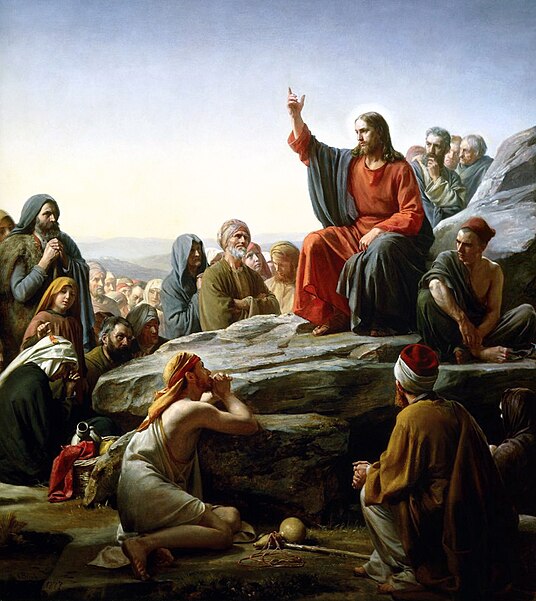
Sermon on the Mount

Sermon on the Mount
LifeGuide Bible Studies
By John Stott
Table of Contents
Getting the Most Out of Sermon on the Mount
1. Unexpected Blessings - Matthew 5:1-12
2. God's Way to Make a Difference - Matthew 5:13-16
3. The Importance of Obeying God's Law - Matthew 5:17-20
4. What's Wrong with Private Sins? - Matthew 5:21-30
5. Faithfulness in Marriage & Speech - Matthew 5:31-37; 19:3-9
6. How to Really Love Your Enemies - Matthew 5:38-48
7. How Not to Be Religious - Matthew 6:1-6, 16-18
8. A Pattern for Dynamic Prayer - Matthew 6:7-15
9. What God Thinks of My Ambitions - Matthew 6:19-34
10. Relationships That Encourage - Matthew 7:1-12
11. Detecting the Lies of Our World - Matthew 7:13-20
12. Making the Choice of a Lifetime - Matthew 7:21-29
A sample of the first study is available at www.ivpress.com
The Message of the Sermon on the Mount

Outline....
Introduction: what is this sermon? - 5:1-2
A Christian's character: the beatitiudes - 5:3-12
A Christian's influence: salt and light - 5:13-16
A Christian's righteousness: Christ, the Christian and the law - 5:17-20
A Christian's righteousness: avoiding anger and lust - 5:21-30
A Christian's righteousness: fidelity in marriage and honesty in speech - 5:31-37
A Christian's righteousness: Non-retaliation and active love - 5:38-48
A Christian's religion: not hypocritical but real - 6:1-6,16-18
A Christian's prayer: not mechanical but thoughtful - 6:7-15
A Christian's ambition: not material security but God's rule - 6:19-34
A Christian's relationships: to his brothers and his father - 7:1-12
A Christian's relationships: to false prophets - 7:13-20
A Christian's commitment: the radical choice - 7:21-27
Conclusion: who is this preacher? - 7:28,29
Subscribe to:
Posts (Atom)